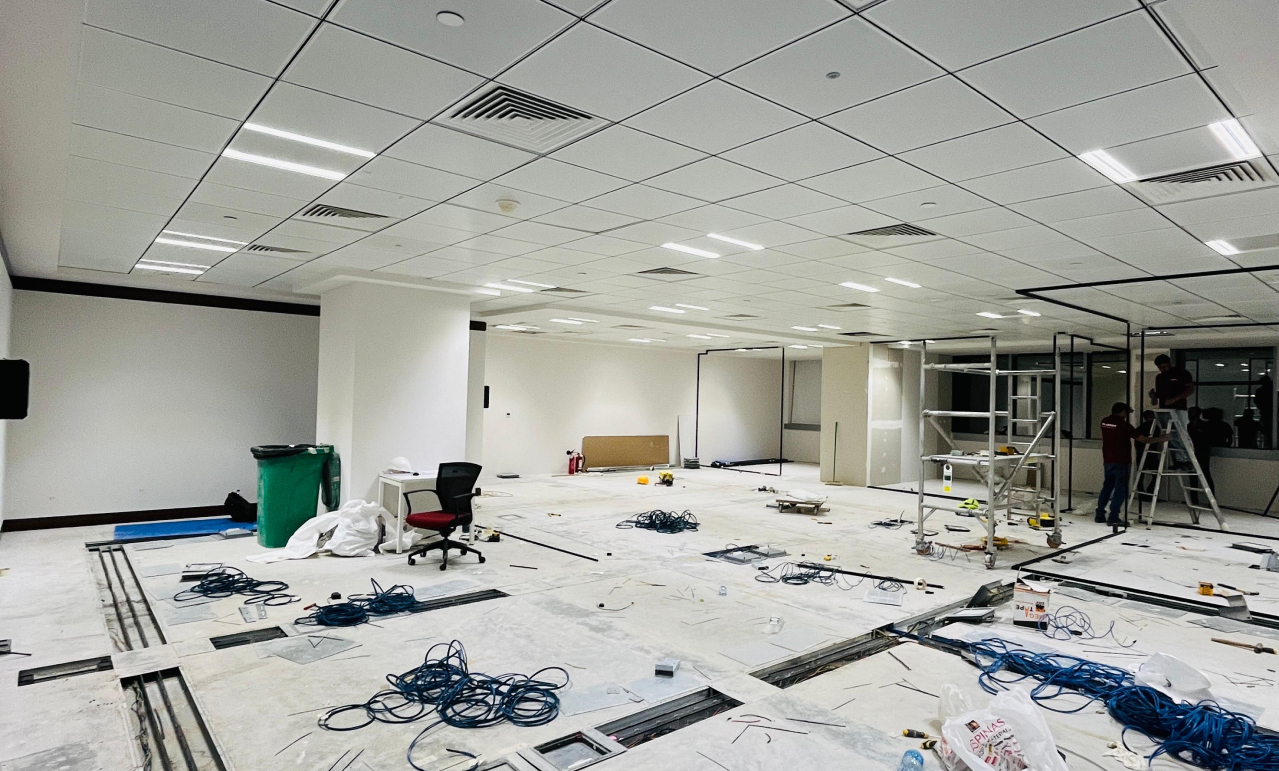
Sarah stared at the sterile white walls of her cubicle, feeling her creativity drain away like water through a sieve. The fluorescent lights hummed overhead, casting harsh shadows that seemed to mock her blank computer screen. She wasn’t alone across corporate America, millions of workers sit trapped in spaces that suffocate rather than inspire, wondering why their best ideas never seem to surface during office hours.
But what if your workspace could be different? What if, instead of killing creativity, your office became the very catalyst that sparked it?
The Hidden Psychology of Space
There’s something almost magical about how our environment shapes our thoughts. Picture this: you walk into a room flooded with natural sunlight, where living green walls breathe alongside you, and suddenly your mind feels more alive. This isn’t imagination, it’s neuroscience in action.
Research reveals that employees in thoughtfully designed environments don’t just feel better; they perform 20% better. Their brains literally function differently when surrounded by elements that honor our fundamental human needs for light, nature, and connection. These aren’t luxury amenities, they’re productivity powerhouses disguised as design choices.
In our hybrid work era, offices face an identity crisis. They can no longer simply house bodies; they must nurture souls. The question becomes: will your space be a destination that draws people in, or a detention center they can’t wait to escape?
Crafting Spaces That Honor How Humans Actually Work
Think about your own work patterns. Sometimes you need to disappear into deep focus, your mind diving into complex problems like a pearl diver seeking treasure in the depths. Other times, you crave the electric energy of collaboration, where ideas bounce between minds like sparks jumping between live wires. And occasionally, you just need a moment to breathe, to let your subconscious work its magic in a casual, pressure-free environment.
The most powerful offices recognize this beautiful complexity of human work styles. They create what we might call “work neighborhoods” distinct zones that serve different psychological needs:
The Sanctuary: Quiet alcoves where introverts can recharge and anyone can achieve the flow state that produces breakthrough thinking. These aren’t just quiet rooms; they’re carefully crafted cocoons that signal to your brain: “It’s safe to go deep here.”
The Commons: Open collaboration spaces that buzz with possibility, where chance encounters spark unexpected innovations. Think village squares rather than sterile conference rooms—places where serendipity feels at home.
The Living Room: Casual spaces that trick your brain into relaxation, where the best conversations happen over coffee and the rigid hierarchy melts away. Innovation often wears jeans and speaks in whispers over shared snacks.
Bringing the Outside World In
There’s a reason we feel renewed after a walk in the park or energized by ocean views. Our brains evolved in nature, not under fluorescent lights. When we exile ourselves from natural elements, we’re fighting millions of years of evolution and losing.
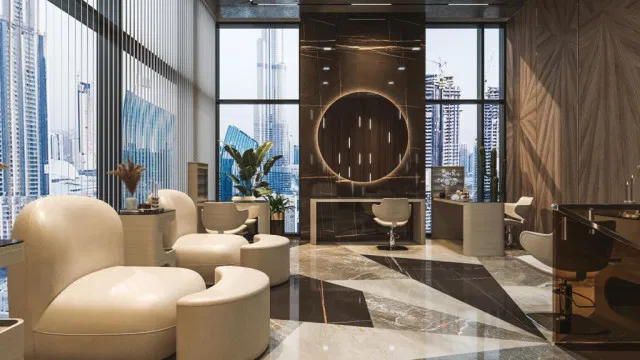
The most inspiring offices understand this primal need. They position workstations where morning light can kiss computer screens, replace solid walls with glass that lets light dance through spaces, and invite living plants to share the air we breathe. These aren’t decorative choices; they’re declarations that human wellbeing matters.
One tech company in San Francisco transformed their productivity simply by adding a living wall to their main workspace and adding some interior decors. Stress levels dropped, sick days decreased, and perhaps most surprisingly—the number of breakthrough innovations increased by 40%. Plants, it turns out, are excellent colleagues.
The Secret Language of Color
Colors whisper to our subconscious, influencing emotions and energy levels in ways we rarely notice consciously. Walk into a room painted sterile white or institutional beige, and your creativity might go into hibernation. But step into a space where calming blues meet energizing pops of orange, and suddenly your mind feels permission to explore.
The most effective color palettes tell a story about the work that happens in each space. Deep blues and greens create mental oases where focus feels effortless. Warm yellows and oranges inject spaces with optimism and energy. The key isn’t choosing one perfect color, but creating a symphony where different hues support different types of thinking.
Technology That Disappears
The most powerful technology is the kind you never notice until you need it. In truly inspiring offices, screens appear when ideas need capturing, charging happens wirelessly and effortlessly, and video calls connect with the clarity of face-to-face conversation.
But here’s the crucial insight: technology should enhance human connection, not replace it. The best offices use smart boards that feel as natural as whiteboards, wireless systems that eliminate the cable chaos that disrupts flow states, and acoustics that let whispered conversations stay private while keeping group energy vibrant.
The Sound of Productivity
Close your eyes and imagine your most productive work environment. What do you hear? Probably not the jarring ring of phones, the clatter of keyboards, or the echo of conversations bouncing off hard surfaces. Sound shapes our ability to think more than we realize.
The most thoughtful offices understand that sound is an invisible design element. They use acoustic panels disguised as art, strategically placed plants that absorb noise naturally, and soft materials that turn harsh echoes into gentle whispers. They create what acousticians call “sound masking” the gentle background hum that helps our brains filter distractions and find focus.